Embarking on a yoga journey is accessible to everyone! Discovering beginner resources, like a yoga sequence for beginners PDF, simplifies the initial steps.
Yoga’s popularity is soaring, offering holistic wellness benefits for all fitness levels, making it a perfect starting point for a healthier lifestyle.
What is Yoga and its Benefits?
Yoga, originating in ancient India, is a multifaceted practice encompassing physical postures (asanas), breathing techniques (pranayama), and meditation (dhyana). It’s far more than just stretching; it’s a holistic system designed to unite the mind, body, and spirit. A yoga sequence for beginners PDF can be a fantastic entry point to understanding these core elements.
The benefits are extensive and well-documented. Physically, yoga improves strength, flexibility, and balance. Mentally, it reduces stress, anxiety, and promotes a sense of calm. Regular practice can also enhance cardiovascular health and improve sleep quality. Many find that even a short, beginner-focused sequence, easily accessible through a PDF guide, can significantly impact their overall well-being.
Yoga is adaptable to all levels, making it safe and gentle for newcomers while offering challenges for experienced practitioners. Whether seeking physical fitness, mental clarity, or spiritual growth, yoga provides a pathway to holistic wellness, and a well-structured PDF sequence can help you begin.
Why Choose Yoga as a Beginner Exercise?
For those new to exercise, yoga presents a uniquely accessible and beneficial starting point. Unlike high-impact activities, yoga is gentle on the joints, minimizing the risk of injury – a crucial consideration for beginners. A yoga sequence for beginners PDF often emphasizes foundational poses, building strength and flexibility gradually.
Yoga’s emphasis on mindful movement encourages body awareness, helping you understand your limitations and move with intention. This contrasts with many traditional workouts that prioritize speed or intensity. Furthermore, the breathing techniques (pranayama) integrated into yoga practice calm the nervous system and reduce stress, offering both physical and mental benefits.
The availability of resources like beginner-friendly PDFs makes starting incredibly convenient. You can practice in the comfort of your own home, at your own pace, and tailor the sequence to your individual needs. It’s a sustainable and empowering way to begin a fitness journey.
Types of Yoga Suitable for Beginners
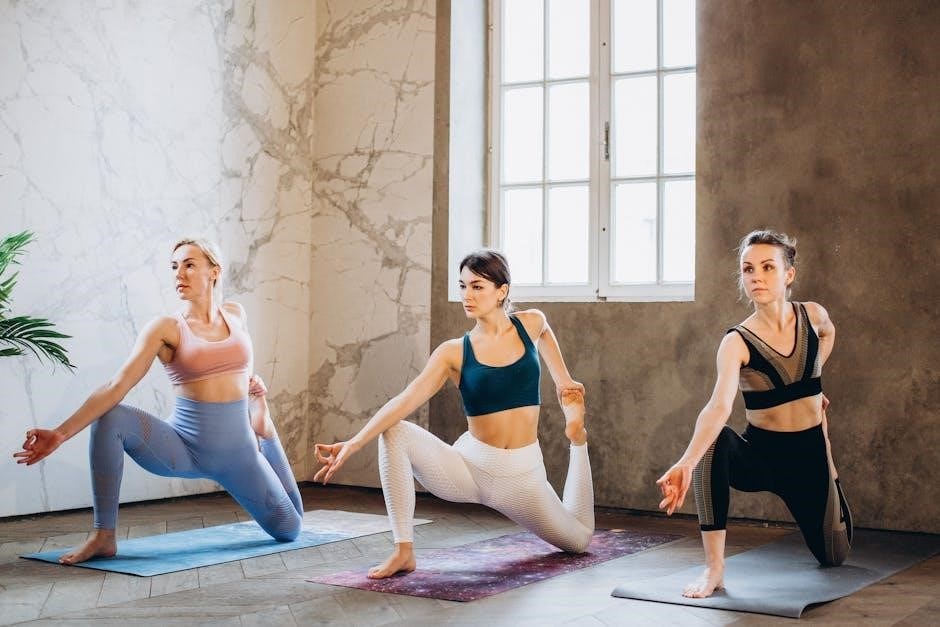
Several yoga styles are ideal for newcomers. Hatha, Restorative, and modified Vinyasa, often found in a yoga sequence for beginners PDF, provide gentle introductions.
Hatha Yoga: The Foundation
Hatha yoga is frequently recommended as the perfect starting point for beginners, and is often the basis for a yoga sequence for beginners PDF. This classical style emphasizes holding poses for longer durations, allowing ample time to understand proper alignment and build foundational strength.
Unlike faster-paced styles, Hatha focuses on static poses combined with breathwork, creating a mindful and accessible practice. A typical Hatha class will incorporate a series of basic postures, like mountain pose, downward-facing dog, and warrior poses – all commonly detailed within beginner-focused PDFs.
The slower tempo allows individuals to connect with their bodies, cultivate body awareness, and learn to modify poses as needed. It’s a safe and gentle introduction to the core principles of yoga, preparing you for exploring other styles later on. Many online resources and PDFs highlight Hatha as the cornerstone of a successful yoga practice.
Restorative Yoga: Gentle and Relaxing
For those seeking a deeply relaxing introduction, restorative yoga, often featured in a gentle yoga sequence for beginners PDF, offers a profoundly calming experience. This practice utilizes props – blankets, bolsters, and blocks – to fully support the body in passive poses, allowing for deep relaxation and stress reduction.
Restorative poses are held for extended periods, typically five to twenty minutes, encouraging the nervous system to shift into a state of rest and repair. Unlike more active styles, restorative yoga requires minimal physical exertion, making it ideal for beginners or those recovering from injury.
A restorative sequence might include supported child’s pose, legs-up-the-wall pose, or supported twists, all designed to release tension and promote a sense of well-being. Many beginner PDFs emphasize restorative poses as a way to cultivate mindfulness and self-compassion.
Vinyasa Yoga: Flow and Movement (with modifications)
Vinyasa yoga, known for its dynamic flow linking breath to movement, can be adapted for beginners, and is often included in a carefully curated yoga sequence for beginners PDF. While appearing more challenging, modifications are key to making it accessible. A beginner Vinyasa flow typically involves sun salutations, warrior poses, and simple twists.
The “flow” aspect means moving seamlessly from one pose to the next, coordinated with your inhale and exhale. However, beginners should focus on mastering the foundational poses before attempting complex transitions. PDFs often demonstrate modifications, such as dropping to the knees during chaturanga or taking breaks as needed.
Look for beginner Vinyasa PDFs that emphasize proper alignment and offer variations for different levels of flexibility and strength. Remember, it’s about the journey, not achieving perfection!
Essential Poses for a Beginner Sequence
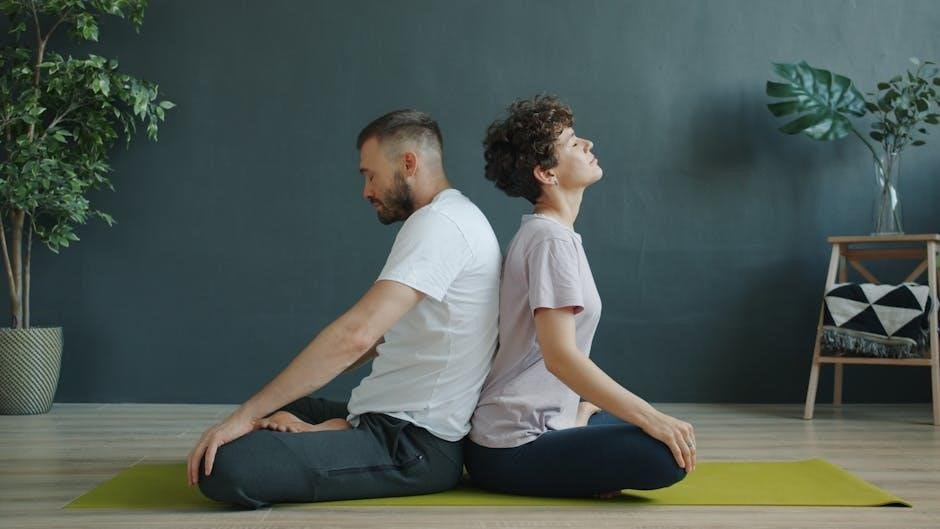
A well-structured yoga sequence for beginners PDF will prioritize foundational poses. These build strength, flexibility, and body awareness, preparing you for more advanced practices.
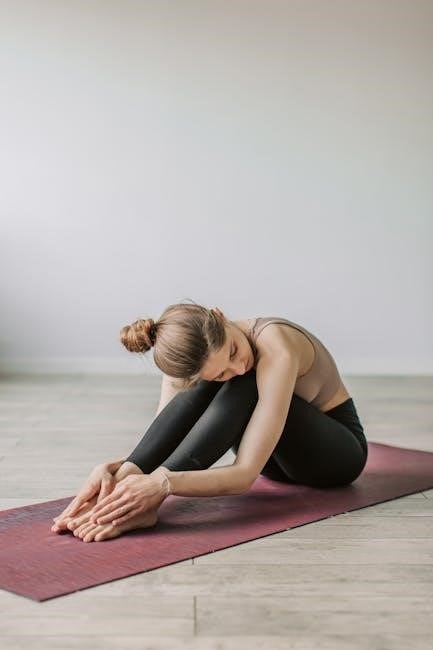
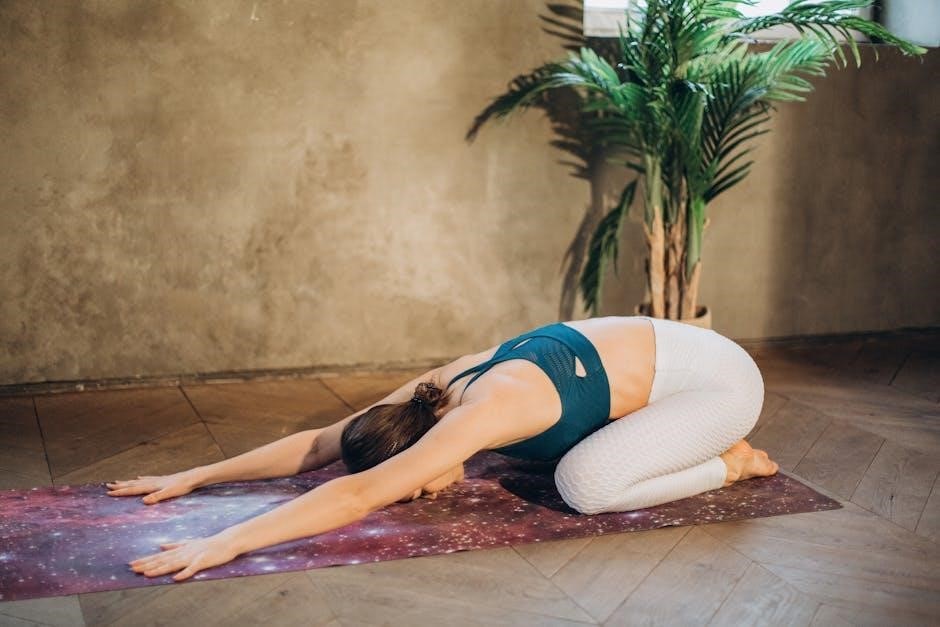
Child’s Pose (Balasana) ─ The Resting Pose
Child’s Pose is frequently highlighted within a yoga sequence for beginners PDF as a crucial resting posture. It’s an invaluable opportunity to reconnect with your breath and gently release tension throughout the body, particularly in the back, hips, and shoulders.
Beginners often find this pose incredibly comforting and grounding, offering a safe haven during practice. A good PDF will detail variations – knees together or apart – to accommodate different body types and levels of flexibility. It’s a pose you can return to throughout your practice whenever you need a moment to pause and recalibrate.
Focus on softening your belly against your thighs and allowing your forehead to rest on the mat (or a block if needed). This pose isn’t about achieving a perfect shape; it’s about finding a sense of calm and surrender. It’s the perfect pose to begin and end your yoga session.
Mountain Pose (Tadasana) ⎼ Establishing Grounding
Mountain Pose, or Tadasana, is often the foundational pose detailed in a yoga sequence for beginners PDF. While seemingly simple, it’s about actively engaging your entire body and establishing a strong, grounded connection to the earth.
A well-designed PDF will emphasize proper alignment: feet hip-width apart, weight evenly distributed, core engaged, shoulders relaxed, and crown of the head reaching towards the ceiling. It’s not just standing tall; it’s about cultivating a sense of stability and presence.
This pose builds awareness of your posture and body alignment, which is crucial for all other poses. Beginners may find it helpful to visualize a string pulling them upwards from the crown of their head. It’s a pose to revisit throughout your practice to check in with your alignment and grounding.
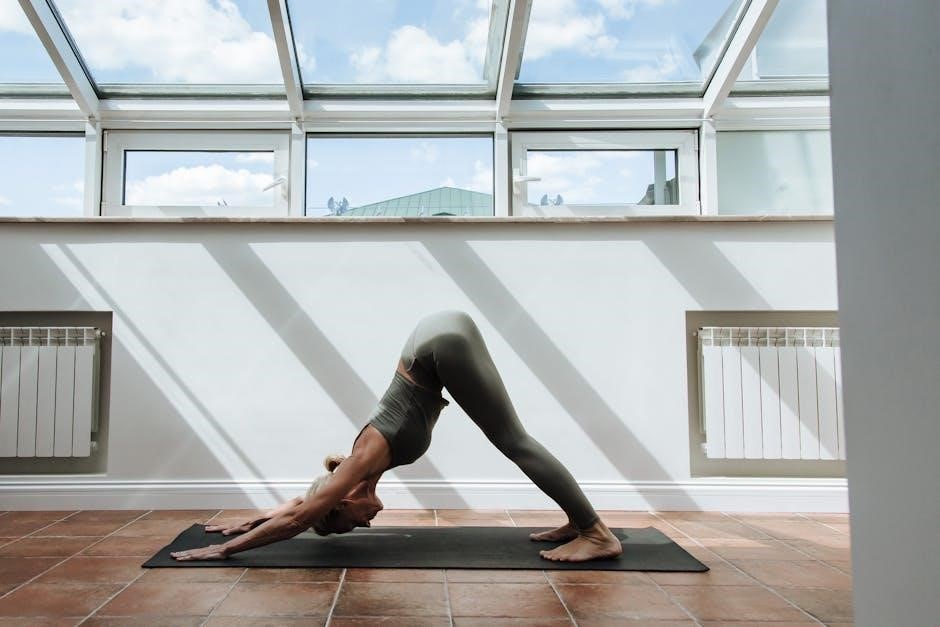
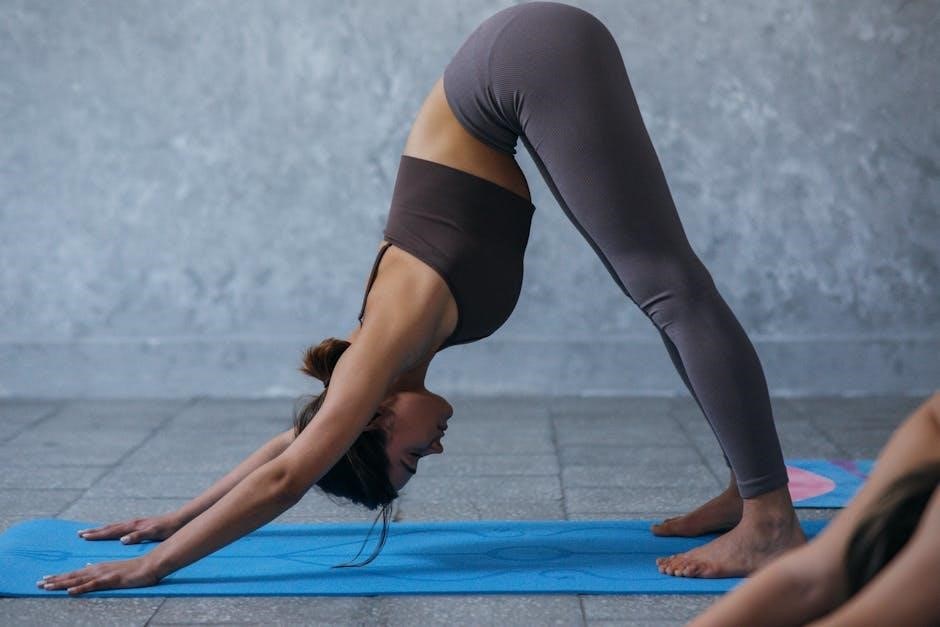
Downward-Facing Dog (Adho Mukha Svanasana) ⎼ Full Body Stretch
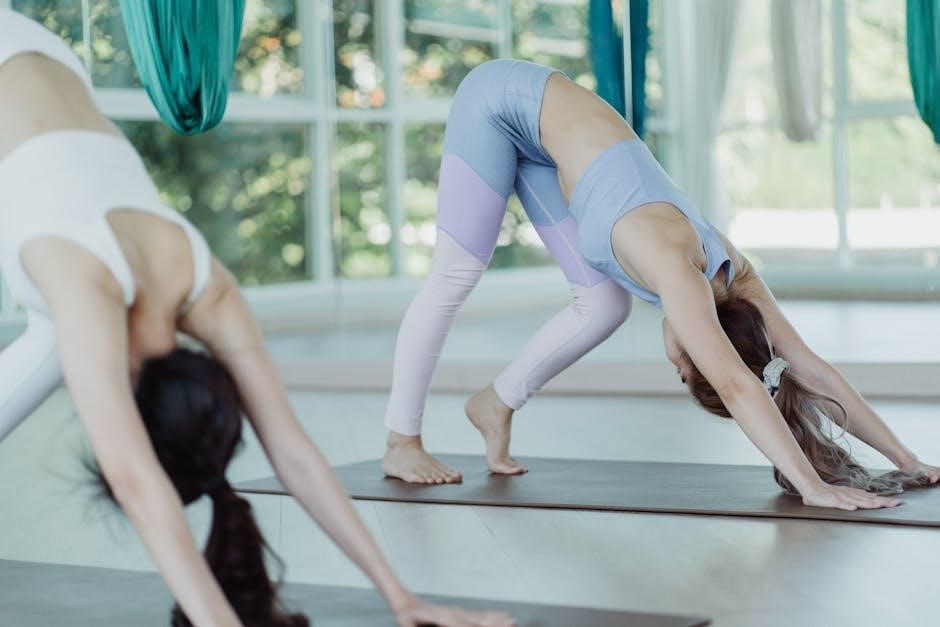
Downward-Facing Dog, or Adho Mukha Svanasana, is a cornerstone pose frequently featured in a yoga sequence for beginners PDF. It’s a fantastic full-body stretch that strengthens arms, legs, and core while lengthening the spine.
Beginner PDFs often provide modifications, as this pose can be challenging. Common cues include bending the knees, keeping the heels lifted, and focusing on lengthening the spine rather than achieving a “perfect” shape. The emphasis is on creating space and releasing tension.
A good PDF will highlight the importance of distributing weight evenly between hands and feet. It’s a pose to move into and out of slowly, paying attention to your breath. Remember, it’s about the sensation of stretch, not achieving a specific aesthetic.
Warrior I (Virabhadrasana I) ─ Strength and Stability
Warrior I, or Virabhadrasana I, is a powerful pose commonly included in a yoga sequence for beginners PDF, building both strength and stability. It targets the legs, core, and shoulders, promoting a sense of grounded power.
Beginner-friendly PDFs will often emphasize proper alignment: a strong stance with the front knee stacked over the ankle, hips squared forward, and arms reaching overhead. Modifications are key; a wider stance or slightly bent back knee can increase accessibility.
These PDFs frequently advise focusing on the breath to maintain stability and prevent strain. It’s crucial to avoid locking the knees and to keep the shoulders relaxed. Warrior I isn’t about how low you go, but how well you maintain form.
Triangle Pose (Trikonasana) ─ Flexibility and Balance
Triangle Pose, or Trikonasana, is a cornerstone of many yoga sequences for beginners, often detailed in beginner-friendly PDFs, enhancing flexibility and balance; It stretches the spine, hamstrings, and groins while strengthening the legs and core.
PDF guides typically illustrate proper form: legs wide apart, torso extending sideways, and one hand reaching towards the floor (or a block) while the other extends towards the ceiling. Modifications are frequently suggested, like bending the front knee or using a block to support the hand.
Beginners are advised to focus on maintaining a long spine and avoiding rounding the back. The gaze can be directed upwards, downwards, or straight ahead, depending on comfort. Triangle Pose cultivates stability and mindful extension.
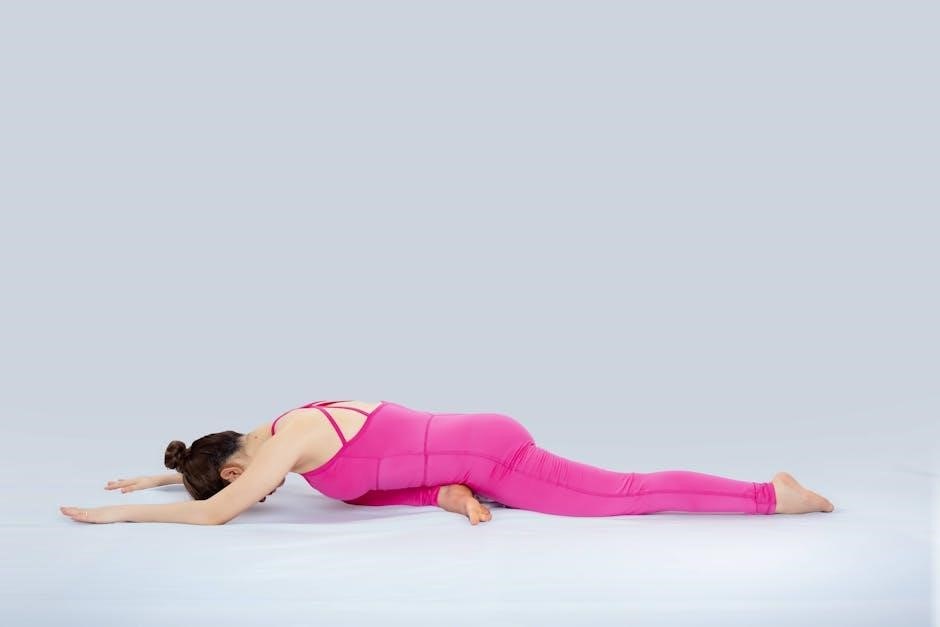
Building Your First Yoga Sequence (PDF Focus)
Utilizing yoga sequence for beginners PDFs streamlines your practice! These resources offer structured routines, ensuring a safe and effective introduction to yoga’s core principles.
Finding Beginner-Friendly Yoga PDFs Online
The digital landscape offers a wealth of yoga resources, particularly beginner-friendly PDFs. A simple online search for “yoga sequence for beginners PDF” yields numerous options, catering to diverse preferences and experience levels. Platforms like Sweat app, and various yoga websites provide downloadable sequences designed specifically for newcomers.
When selecting a PDF, prioritize those that clearly illustrate each pose with images or diagrams. Look for sequences that emphasize foundational poses and proper alignment. Many PDFs also include modifications for individuals with physical limitations, ensuring accessibility. YouTube channels often link to accompanying PDFs, creating a comprehensive learning experience. Remember to choose PDFs from reputable sources to guarantee accuracy and safety. Exploring these readily available resources empowers you to build a personalized yoga practice from the comfort of your home.
Key Elements of a Beginner PDF Sequence
Effective beginner yoga PDF sequences prioritize foundational poses and gradual progression. A well-structured sequence typically begins with gentle warm-up exercises, preparing the body for deeper stretches. Essential poses like Child’s Pose, Mountain Pose, and Downward-Facing Dog form the core, building strength and flexibility.
Sequences should incorporate modifications, offering options for varying levels of ability. Clear instructions detailing proper alignment are crucial to prevent injuries. A balanced sequence includes poses that address different muscle groups and promote overall body awareness. Cooling-down poses and a brief relaxation period, like Savasana, conclude the practice. Look for PDFs that emphasize breathwork (Pranayama) integration, enhancing the mind-body connection. A 16-minute sequence, repeated three times weekly, can yield significant benefits.
Sequence Duration and Frequency
For beginners utilizing a yoga sequence for beginners PDF, consistency is key, but starting slowly is vital. A 16-minute sequence, as offered by instructors like Phyllicia Bonanno on platforms like Sweat, provides a manageable entry point. Initially, practicing three times a week allows the body to adapt and build strength without overexertion.
As comfort and strength increase, frequency can gradually be adjusted to four or five times weekly. Listen to your body and prioritize rest days to prevent injury. Shorter, daily practices can also be beneficial. Remember, the goal isn’t to rush, but to establish a sustainable routine. Regular practice, even in short bursts, yields greater long-term benefits than infrequent, intense sessions.
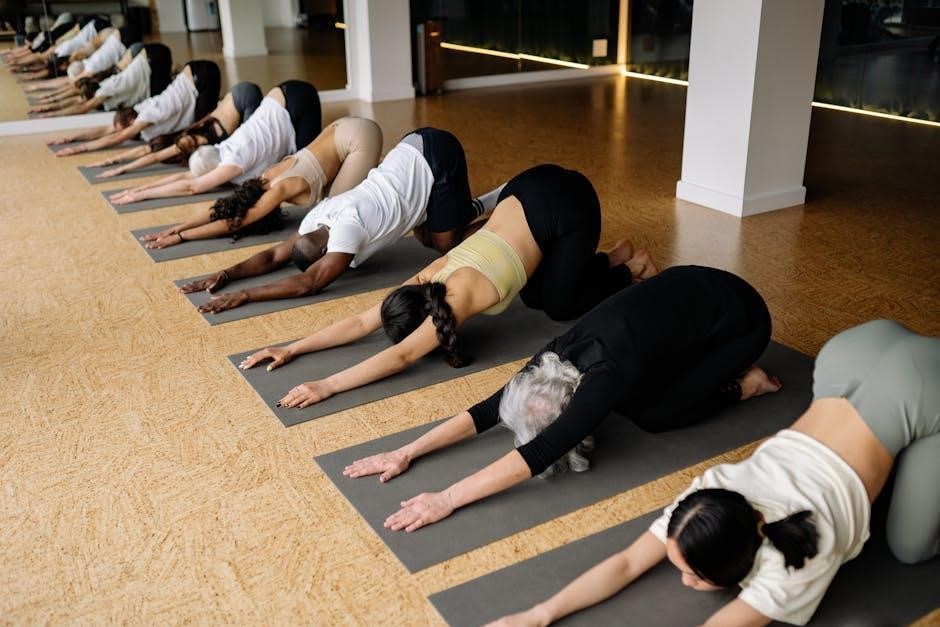
Modifications and Props for Beginners
Yoga is adaptable for all levels! Utilizing props like blocks and straps, alongside pose modifications found in a yoga sequence for beginners PDF, ensures accessibility.
Using Yoga Blocks
Yoga blocks are invaluable tools for beginners, particularly when navigating a yoga sequence for beginners PDF. They bridge the gap between your hands and the floor, making poses more accessible and comfortable. For instance, in poses like Triangle Pose (Trikonasana) or Half Moon Pose, a block placed under your hand can provide support and maintain proper alignment.
Don’t hesitate to use blocks even if you feel like you can reach the floor; they help refine form and prevent strain. They also offer a sense of stability, allowing you to focus on your breath and deepen the stretch safely. A well-designed PDF sequence will often suggest block usage for specific poses, catering to varying levels of flexibility. Experiment with different block heights to find what best suits your body and practice!
Utilizing Straps
Yoga straps are fantastic aids for beginners, especially when following a yoga sequence for beginners PDF. They extend your reach, allowing you to explore poses that might otherwise be inaccessible due to limited flexibility. Think of poses like seated forward folds (Paschimottanasana) or Cow Face Pose (Gomukhasana) – a strap looped around your feet can help you maintain a straight spine and deepen the stretch without straining.
A good beginner PDF will indicate where a strap can be beneficial. Don’t view the strap as a sign of weakness; it’s a tool to enhance your practice and build flexibility gradually. It allows you to actively engage the correct muscles and learn the proper alignment. As your flexibility improves, you can gradually reduce your reliance on the strap, ultimately achieving the pose without assistance.
Modifying Poses for Physical Limitations
A crucial aspect of any beginner yoga practice, particularly when using a yoga sequence for beginners PDF, is understanding modifications. Everyone’s body is different, and pre-existing physical limitations shouldn’t prevent you from enjoying the benefits of yoga. A well-designed PDF will offer variations for common poses, acknowledging that not everyone can immediately achieve full expression.
For example, Downward-Facing Dog can be modified by bending the knees, shortening the stance, or even performing it against a wall. Listen to your body and never push yourself beyond your comfort zone. Prioritize proper alignment over depth. Modifications aren’t “cheating”; they’re intelligent adjustments that allow you to safely build strength and flexibility over time, ensuring a sustainable practice.
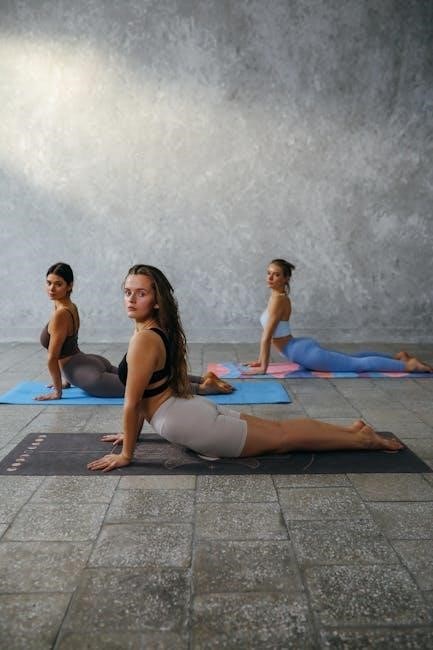
Breathing Techniques (Pranayama) for Beginners
Conscious breathing is integral to yoga! A yoga sequence for beginners PDF should emphasize Pranayama, like Ujjayi and Diaphragmatic breathing, for enhanced practice.
Ujjayi Breath (Victorious Breath)
Ujjayi breath, often called “Victorious Breath,” is a foundational technique in yoga, and a yoga sequence for beginners PDF should absolutely include guidance on it. This technique involves a slight constriction in the back of the throat, as if you were gently fogging up a mirror.
The sound produced resembles the ocean’s waves, creating a calming and meditative rhythm; Practicing Ujjayi breath during your beginner yoga sequence helps to regulate the nervous system, promoting relaxation and focus. It also generates internal heat, warming the muscles and preparing the body for deeper stretches.
Beginners often find it helpful to practice Ujjayi breath while lying down, initially focusing on the sound and sensation. As you become more comfortable, integrate it into each pose within your PDF sequence, synchronizing the breath with movement. Consistent practice of Ujjayi breath enhances body awareness and deepens the overall yoga experience.
Diaphragmatic Breathing (Belly Breathing)
Diaphragmatic breathing, or “belly breathing,” is a cornerstone of mindful yoga practice and should be emphasized within any yoga sequence for beginners PDF. Unlike shallow chest breathing, diaphragmatic breathing utilizes the full capacity of the lungs, promoting deeper relaxation and oxygenation.
To practice, place one hand on your chest and the other on your belly. As you inhale, focus on expanding your belly while keeping your chest relatively still. Exhale slowly, allowing your belly to fall. This technique encourages full, deep breaths, calming the nervous system and reducing stress.
Integrating diaphragmatic breathing into your beginner sequence helps establish a mind-body connection and enhances the benefits of each pose; A well-designed PDF will guide you to coordinate your breath with each movement, fostering a sense of presence and ease throughout your practice.
Resources for Further Learning
Expand your practice beyond a yoga sequence for beginners PDF! Explore YouTube channels, books, and online platforms for continued growth and deeper understanding.
Recommended YouTube Channels for Beginner Yoga
Dive deeper into your practice with readily available online resources! While a yoga sequence for beginners PDF provides structure, YouTube channels offer visual guidance and diverse instruction. For those entirely new to yoga, channels like “Yoga With Adriene” are exceptionally popular, providing welcoming and accessible classes specifically designed for beginners.
Adriene’s approachable style and focus on self-compassion make learning enjoyable and less intimidating. Another excellent option is “Boho Beautiful,” offering stunning visuals and a variety of flows, including beginner-friendly sequences. “Fightmaster Yoga” provides a more traditional approach, with clear instruction and modifications.
These channels often feature sequences mirroring those found in beginner PDFs, allowing you to follow along and refine your form. Remember to listen to your body and modify poses as needed, utilizing the visual cues to ensure proper alignment and prevent injury. Supplementing your PDF practice with these channels will accelerate your progress and deepen your understanding of yoga.
Best Yoga Books for Beginners
Complement your digital learning with the wisdom found in printed guides! A yoga sequence for beginners PDF is a great start, but books offer in-depth explanations of poses, breathing techniques, and the philosophy behind yoga. “Yoga for Dummies” is a classic, providing a comprehensive overview for absolute beginners, breaking down complex concepts into easily digestible information.
“Light on Yoga” by B.K.S. Iyengar, while more detailed, remains a foundational text, offering precise instructions and illustrations for numerous poses. For a more modern approach, consider “Yoga Anatomy” by Leslie Kaminoff and Amy Matthews, which explores the biomechanics of yoga, helping you understand how poses affect your body.
These books often include sample sequences similar to those in beginner PDFs, allowing you to build a well-rounded practice. They provide a valuable resource for deepening your understanding and progressing safely on your yoga journey.
Online Yoga Platforms and Apps
Leverage technology to enhance your practice and access a wealth of resources! While a yoga sequence for beginners PDF provides a static guide, online platforms offer dynamic instruction and personalized experiences. Glo offers a vast library of classes, including dedicated beginner series led by experienced teachers, with options to filter by style and duration.
Down Dog is a highly customizable app that generates unique yoga flows based on your level and preferences, allowing you to build sequences similar to those found in PDFs, but tailored to your needs. Yoga with Adriene on YouTube is a fantastic free resource, offering numerous beginner-friendly videos and playlists.
These platforms often include modifications and pose breakdowns, ensuring a safe and effective practice, supplementing the information from a beginner PDF.